Author, Ruth Hogan, has a special way of viewing the world. It was obvious in her delightful first novel, 'The Keeper of Lost Things' and again in this novel.
Masha's lost her son, Gabriel, and has been unable to recover from his loss. Her friends and family have been tiptoeing round the topic and Masha' sensitivities. As readers we are inside Masha's head and we like her. She has courage but needs a push. She gets one.
This is a story full of hope and laughter. As Masha learns to live again she also learns to be a more tolerant, kinder person and we learn with her. That's the nice thing about Ruth Hogan's writing we laugh, cry and learn. It's a good read for anyone and a good novel for anyone needing a boost and a bit of positive thinking.
Showing posts with label novel. Show all posts
Showing posts with label novel. Show all posts
Tuesday, 18 December 2018

Tuesday, 11 December 2018
Book Review: 'The Spare Room' by Helen Garner
Not an easy read, cancer is never an easy topic but Australian author, Helen Garner, does it with style.
A friend, dying of cancer, comes to stay. That's a difficult topic to write about, and when the friend is simply a pushover for any 'alternative' treatments the scene is set for a struggle.
Cry, laugh - yes, laugh - and enjoy this sensitively handled look at death, friends dying, cancer and hope.
A friend, dying of cancer, comes to stay. That's a difficult topic to write about, and when the friend is simply a pushover for any 'alternative' treatments the scene is set for a struggle.
Cry, laugh - yes, laugh - and enjoy this sensitively handled look at death, friends dying, cancer and hope.
Friday, 15 June 2018
Review of 'Skeleton God' by Eliot Pattison
 Skeleton God by Eliot Pattison
My rating: 5 of 5 stars
Another well written tale from Eliot Pattison. Once again poor Shan, who longs for a quiet life, visits to his son and from Lokesh, finds himself a tool of Colonel Tan who has put him in place as a constable in a poor Tibetan village.
Who put a mobile phone in a saint's grave? It's an ancient tomb guarded by a special and well loved old nun but now it's opened, and the saint's body is accompanied by the remains of a Chinese soldier killed fifty years ago and an American man murdered only hours earlier, but his phone gave his hidden grave away. Shan is once again having to try and protect Tibetans, sort out the mess and find a home for the soldier and the American.
It's a good read, with the characters we know still growing and developing, Tibet as ever an intriguing setting, and a plot with enough twists to keep you guessing. Fans will enjoy this addition to the series, newcomers, get cracking with The Skull Mantra and enjoy the whole series.
View all my reviews
Review: Finding Davey by Jonathon Gash
I have always enjoyed
Jonathon Gash's Loveday series and learning about antiques, fakes, and
rogues in the antique world. The author had a way of creating characters
that were 3D, likeable and amusing. 'Finding Davey' however is a
standalone novel and it's a stunner. I really couldn't put it down, it's
a page turner and a heart tugger.
Again Jonathon Gash uses his knowledge of antiques and furniture, but this time it's different. Bray is a grandfather who works as a skilled and knowledgeable craftsman who makes beautiful furniture and repairs antiques and makes reproductions from the original plans. his work revolves round his grandson. When his son takes his wife and Davey to a wonderful theme park holiday in America Bray is left behind with Davey's dog. And in America, where where anything can be done for money, Davey is kidnapped. It appears there is quite an industry in kidnapping attractive children for rich childless couples.
Now this is where I award five stars for the plot and my writer's brain gasps in admiration. We don't see grandfather Bray dashing off to America to find his grandson. He tries to help his son and wife who are falling apart torn by guilt and grief and he plans. And his plan is brilliant, based on the information he gets from medical specialists on memory and what will have been done to Davey to turn him into the couple's little boy.
There's a lot of medical information about what is done to these kidnapped children who are deliberately watched, approved for some rich couple, then snatched. Bray seeks to find out how young Davey's mind will be wiped of memories and works out a method to restore Davey's memory if he can find him. And finding him is brilliant.
Read the book. It's a great read
Tuesday, 6 September 2016
Review of 'Even Dogs in the Wild' by Ian Rankin
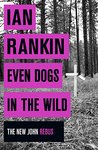 Even Dogs in the Wild by Ian Rankin
My rating: 5 of 5 stars
An Ian Rankin novel is always worth reading. A new Rebus Rankin novel is a cause for celebration. 'Even Dogs in the Wild' is thought provoking and a grim reminder of the misuse of power.
Even though John Rebus is officially retired from the Edinburg police force he can't keep his nose out. When his old friend and colleague, now promoted to D.I.,Siobhan Clarke wants to pick his brains about a peculiar case he is happy to oblige. And soon they are involved with that old villain, Ger Cafferty, and a really complex puzzle. Criss-crossing their path is DI Malcolm Fox, Siobhan's pal, who is supposed to liaise with a Glasgow police force covert team but finds that he needs Rebus's wisdom too.
The plot twists are dizzying, the characters as 3D and 'real' as ever and the ending realistic yet satisfying. If you are not a fan start with earlier novels to get the fullest enjoyment, but this novel stands alone. Any reader who enjoys British police procedurals should really enjoy this one. It's a cracking good read.
View all my reviews
Tuesday, 14 April 2015
Useful Advice for Indies about Twitter.
I am always grateful for places like IndiesUnlimited because of the sound, practical and useful advice I find there. I am nearly sure these extracts come from there. I am now thinking more kindly about Twitter. See what you think.
'Why would Google want tweets? Twitter has become the first line of communication in breaking events. If an event occurs on the other side of the world, tweets are relaying that information in nearly real time. If Google has access to that information (called the Twitter Firehose) then it can include it in search results immediately and it doesn’t have to rely on crawlers to acquire info.
What does this mean for us? Well, first off, it’s probably a good idea to get on Twitter if you are not already. Does this mean that if you tweet about your book fifty times a day, people will start to see you book show up on Google? No. However, if you are active on Twitter, and you can align yourself with good content, there is a better chance that Google will lend credibility to your tweets.'
Makes sense doesn't it? And Google certainly is aiming to take over the internet world.
Another consideration is current events. If you write spy novels that involve stolen information from the government and today a rogue agent is busted for that in real life, then start tweeting. The more you connect your writing to current events (if possible) the better chance you’ll get visibility. The other day I saw an article about human trafficking in our region and thought of DV Berkom and her book Bad Traffick. With a few tweets and a link to the article, bam, you’ve just brought awareness to this tragic scourge on society and linked yourself to the cause. Meanwhile, you just might end up in a search as people turn to Google for more information.
I’m not suggesting spamming Twitter with tons of promos for your books. I’m suggesting that you now have a chance to connect yourself to issues that are important to you through means that might not have been available before. Please don’t take this as a holy grail.
Nice example and worth thinking about fellow writers?
We struggle every day as authors to get the word out about what we do. It’s important to be firing on all cylinders. The agreement between Google and Twitter might help us in that endeavor. So, if you aren’t active on Twitter, maybe now is the time to reconsider. It will take a few months before the effect is noticed on Google, as the best estimate of the functionality taking place is sometime in the first half of the year. Happy tweeting!
Reviews. We Indies really need them. This advice is simple, easy to follow and comes from one of those nice author marketing groups whose name I cannot remember!
Here is how to find book reviewers on Twitter:
1. Load up Twitter, and using the search form, search "book reviewer" "book blogger" "(your genre) reviews" and other topics like that. Be creative! I don't want everyone contacting the same exact reviewers!
2. This will show you a list of Tweets. Scroll and find the "People" box, and click "View All". You will then find all profiles related to your search topic.
3. Click on each profile and make sure they are a) active with a fairly recent tweet and b) they have at least 100 followers (the more the better).
4. Then, identify possible matches, click through the Website listed on their Twitter profile, and find their rules for review submissions.
5. If your book is within the confines of their rules, then submit your book for review!
That's it! You should be able to find quite a few people willing to review your book! They will have some reach on social media, and they will increase exposure of your book!
The Writer's Choice members are split between those who use Twitter and those who won't. I've found it useful for spreading the word about eco and political things I care about and for sharing markets and tips for writers. I do not spend time there. I cheat. Most sites I visit, or the emails which groups send me, have a Twitter button and a ready made tweet to send. I use those to keep my presence out there. And I limit any marketing to things like Hurray. My novel Tizzie made the short list in the M.M. Bennett Historical fiction comp.
Sunday, 23 September 2012
We're off!
We have a deadline for our book launch - October 17th. Thank goodness. Sometimes it seemed we'd never make it.
On that day I will be in the library giving a talk about the Writer's Choice publishing co-operative. In the week running up to Launch Day I will also be interviewed on the local radio and the local TV. I'm angling for the national radio book slots and have approached the national newspapers with articles on me and Writer's Choice.
It's exciting, exasperating and frustrating. My first two books are anthologies, collections of short stories which have already been published in magazines in the UK, Canada, America and Australia. George is our American member of the group and his book is a novel. His book will be launched at the same time. I will talk about his novel at my interviews. He will talk about my anthologies at his interviews. We are a group, more power to our elbows.
It seems to me that either we will surf this new wave of publishing or be swamped. But we'll never know if we don't try. I'd rather aim at the moon and land on a mountain top, than aim at the mountain and get stuck in the foothills!
Thursday, 19 April 2012
A case of the Emperor's New Clothes?
Right now I'm mulling over a serious problem. What do I tell my two new online students, or any writing students, who work with me at perfecting their novels ready for a publisher? Do I stick with the traditional advice or do I give in to my now serious doubts and discuss them, giving the students that publishing information?
There is no doubt, I repeat this, no doubt, that the basic information handed out in books, on websites, and in writers' magazines or online writers' groups on how to get published with traditional publishers is correct. And this information is a must for new writers to follow. I have no problems with presenting it to my students at all. I know that often a first novel is not publishable even if many of the new writers don't yet accept that. All writers need to believe in themselves, to be arrogant enough to keep writing in the face of rejections. As they struggle with editing, query letters, synopsis and researching agents they are learning and you hope that one day, if they have sufficient of a writers' 3Ds or 3Ps, they will get there, write a publishable novel. Probably with their fourth or fifth attempt.
But what happens when you have more experienced writers, writers who have been publishing short stories, plays, articles, poems for a few years, and who have now written several novels? These writers really have the skills to follow the How to Get Published instructions. They have an original, well written, perfectly edited and presented manuscript. They have an attention grabbing but fully detailed synopsis, and their query letters are a work of art. They have researched their agents and publishers carefully. They have done everything necessary and yet cannot rouse the interest of an agent or publisher.
Current traditional thinking is that their novel simply isn't good enough or it would be published. All writers learn this very quickly and accept it as gospel. But is it?
To make way in traditional publishing a writer needs an agent. Agents are the guardians of the gateway to the traditional publishers. Some very helpful U.K. agents told me they take on one or two people a year and receive, according to the size of their agencies, 4,000 to 8,000 queries a year. Allowing for the slush pile rule that only 10% of the queries are worth reading that still means 400 to 800 query packages to be read. If each agent selects two that leaves anything from 398 to 798 manuscripts unpublished.
Are they unpublishable? How much does luck play a part in choices? How much does fashion play a part? How much does the agent's own preferences play a part? How much does 'we want more of the same', commercial candy floss play a part? How much do business considerations like the writer's age, where they live or how contract savvy they are play a part?
I'm beginning to think that this idea that these novels are not good enough is in fact a case of the Emperor's New Clothes and that giving the traditional advice to these more experienced writers, is keeping them locked into the traditional publishing world and its systems at a time when there are other opportunities. Of course the traditional publishing world is happy to keep these writers dangling, hoping that one day they too can have a Penguin or Oak tree, on their novel, because publishing is a business and the publishers want new writers. So if it's not this year, it might be next year or the year after that. Keep 'em hoping with the idea that their novel isn't publishable yet but the next one might be.
Cynical? Possibly, but I think I will be recommending that the experienced writers I know, with manuscripts which we have read, worked on and enjoyed, can try the traditional route of course, but that they will be better off with the Small Presses, those e-book and POD publishers who are open to submissions without an agent. And for those writers with energy and excellent PR ideas, who don't give a fig for the snooty put downs which self published fiction so often receives, I would even recommend that they can go that route and see how much they can earn!
Subscribe to:
Posts (Atom)